Rayvon Fouché
Cindy Anh Nguyen
Evelin Heidel
Hugo Solís García
AI, Authenticity, and the Future of Hip Hop
Hip Hop has a history of taking what is available and flipping it into something fresh. For instance the turntable in the hands of DJs became a site of musical authorship and improvisation. Producers transformed the music production center (MPC) into the backbone of an entire sound. Technology has always been part of the culture. The use of AI in Hip Hop is not just a new way to make music—it is a challenge to the very identity of Hip Hop. As fans scholars and lovers of Hip Hop we must ask: Is AI just another tool like the drum machine before it or does it pose a deeper threat to the authenticity that defines the genre? This talk interrogates what it means when technology moves from assisting in Hip Hop’s creation to actively performing it. Hip Hop has always been rooted in identity but how does it evolve in an era where identity can be artificially generated? While we acknowledge concerns about AI we reject reactionary narratives that frame new technologies as inherently destructive.
Rayvon Fouché
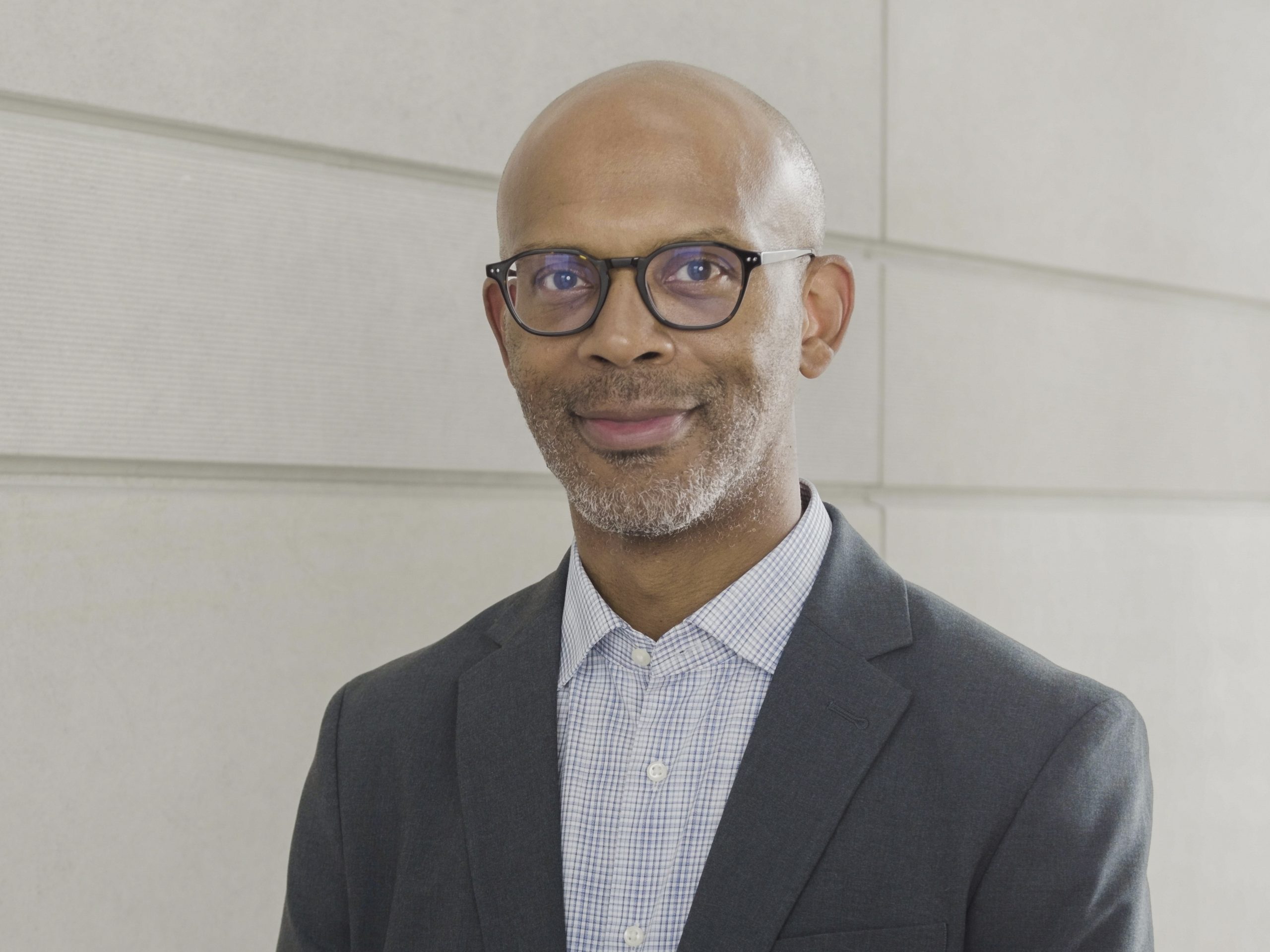
Rayvon Fouché holds a joint appointment as Professor of Communication Studies, School of Communication, and Professor of Journalism, Medill School of Journalism, Media, and Integrative Marketing Communications, and is currently Associate Dean for Graduate Education in the School of Communication. His major publications include Black
Inventors in the Age of Segregation (Johns Hopkins University Press, 2003), Appropriating Technology: Vernacular Science and Social Power (University of Minnesota Press, 2004), Technology Studies (Sage Publications, 2008), the 4th Edition of the Handbook of Science & Technology Studies (MIT Press, 2016), Game Changer: The Technoscientific Revolution in Sports (Johns Hopkins University Press, 2017), and Technoskepticism: Between Possibility and Refusal (Stanford University Press, 2025).
Interpretive Digital Humanities: Multivocal Meaning Making between Computation and Culture
How do we confront the ongoing epistemological violence of colonialism upon the cultural record? This talk seeks to confront this cultural record of colonialism that perpetuates an epistemological divide between the west and rest, modern and traditional, global north and south. I draw from an extended digital humanities case study of an early twentieth century French colonial visual encyclopedia of Vietnamese crafts, cultural practices, and technologies. In conversation with decolonial and feminist theory, Indigenous and Southeast Asian studies, I argue that a critical interpretive digital humanities can make visible the layers of colonial representation, surface plural voices and multidirectional narratives, and dwell in the discomforts of unknowability. This commitment seeks to challenge top down, linear, hegemonic colonial representations that often materialize in static forms of data representations, the privileging of Western frameworks of authorship, and a scientific push towards empirical argumentative findings. As a provocation on research praxis, this keynote confronts disciplinary global north structures of knowledge production and advocates for multivocality as research design principle. In community with her students, this talk moves towards a transparency of method and intention, inviting a critical digital humanities that is messy, incomplete, humble, and collective.
Cindy Anh Nguyen
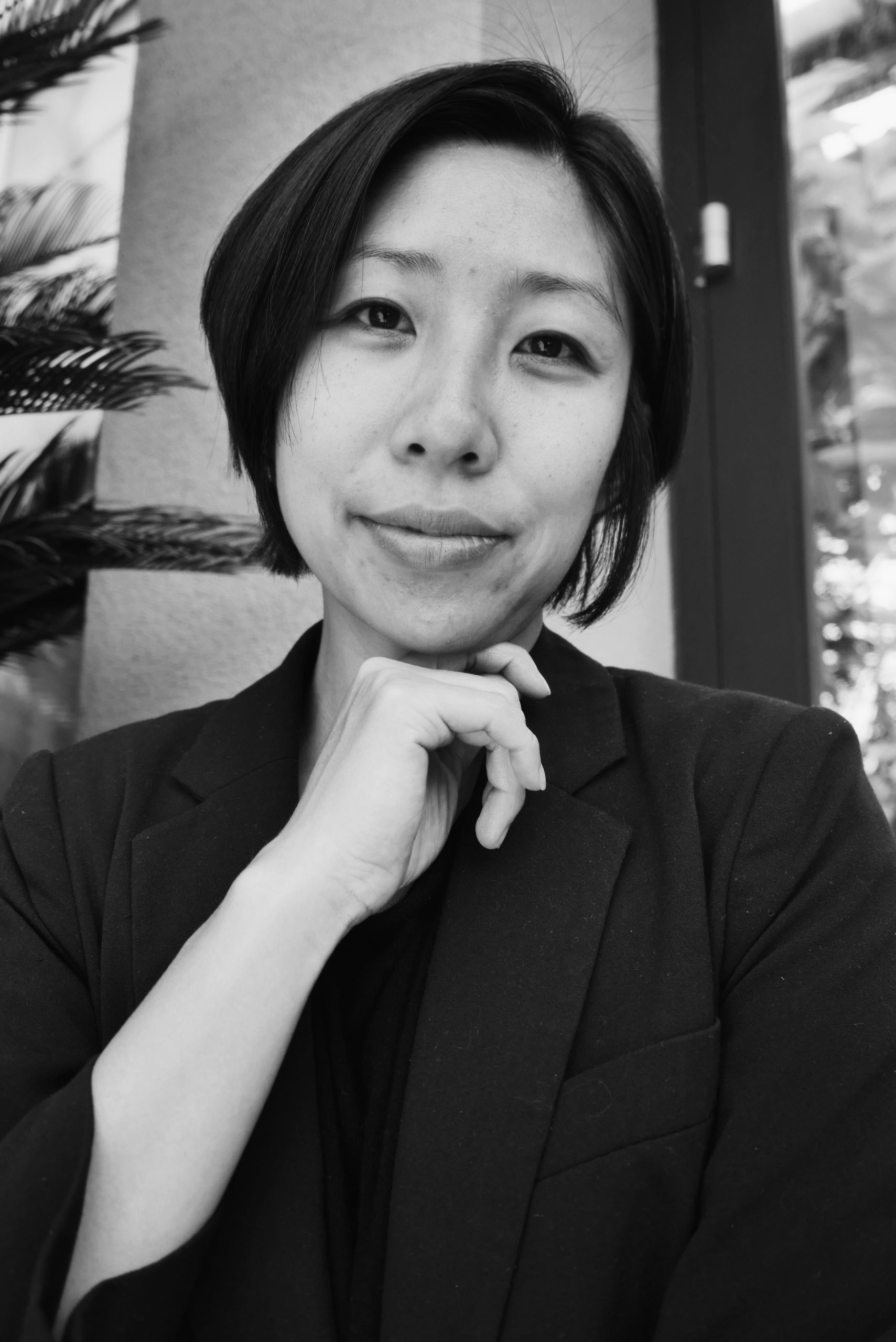
Cindy Anh Nguyen is Assistant Professor at the University of California, Los Angeles with appointments in Information Studies, Digital Humanities Program, and Asian Languages & Culture. Her first book, Bibliotactics: Libraries and the Colonial Public in Vietnam (University of California Press, 2026) uncovers how libraries functioned as both instruments of colonial dominance and an experimental space of public critique. Her transdisciplinary research examines the historical and socio-technical production of knowledge in Southeast Asia through libraries, encyclopedia, visual media, and language through feminist, decolonial, and critical approaches. Her work has appeared in Journal of Vietnamese Studies, Verge: Studies in Global Asia, Journal of Interactive Technology and Pedagogy, the Vietnamese American Refugee Experience Model Curriculum, and numerous edited volumes on history and digital humanities. She is the founder of Culture Futures Rest Lab which explores cultural and computational questions of interpretation and context by centering global south codesign and multivocal knowledge making. She is also a public scholar and community artist. For more information, follow her work at cindyanguyen.com.
People I met on the Internet
Evelin Heidel
Program Director, Wikimedistas de Uruguay

Evelin Heidel is currently the Program Director for Wikimedistas de Uruguay. She is a strategist with over a decade of experience working in open access to knowledge, particularly at the intersection of open movements and cultural heritage. She holds a BA in Literature from the University of Buenos Aires, and was a Harvard Library Innovation Lab Summer Fellow in 2018 and an International Visiting Scholar at the American University, Washington College of Law in 2019. She led the initial setting of the Open GLAM initiative at Creative Commons. Lifelong learner, bookworm, Wikipedia editor, aspiring organic farmer and dog lover.
Identity, Crisis and Imagination; Digital art as a survival mechanism
Espanol
En esta plática haré un recorrido por algunas de las obras de arte digital creadas a lo largo de 15 años, haciendo una reflexión sobre su vigencia, su validez social y el diálogo generado entre la intención artística y la complejidad social. Temas como el uso de datos, la creatividad computacional, la visualización de información y la inteligencia artificial recorrerán transversalmente la conversación buscando reflexionar sobre la frontera entre arte, dispositivo social y colaboración entre humanos y tecnología.
Otros temas que de manera natural se abordan a lo largo de la explicación de las obras son la identidad y la memoria. Diferentes preguntas se asoman al hacer una revisión crítica de las obras presentadas. ¿Pueden las artes digitales detonar reflexiones profundas acerca de la identidad y los puentes culturales? ¿Pueden las artes en su conjunto transformar la manera en que vemos la realidad? En estos momentos de tanta incertidumbre y polarización social y política, ¿pueden los imaginarios colectivos e individuales contribuir a establecer lazos de comunión y reflexión?
English
In this talk, I will take a journey through some of the digital art works created over the course of 15 years, reflecting on their relevance, their social validity, and the dialogue generated between artistic intention and social complexity. Topics such as the use of data, computational creativity, information visualization, and artificial intelligence will transversally run through the conversation, seeking to reflect on the boundary between art, social device, and collaboration between humans and technology.
Other themes that naturally arise throughout the explanation of the works are identity and memory. Different questions emerge when critically reviewing the presented works. Can digital arts trigger deep reflections about identity and cultural bridges? Can the arts as a whole transform the way we see reality? In these times of so much uncertainty and social and political polarization, can collective and individual imaginaries help establish bonds of communion and reflection?
Hugo Solís García
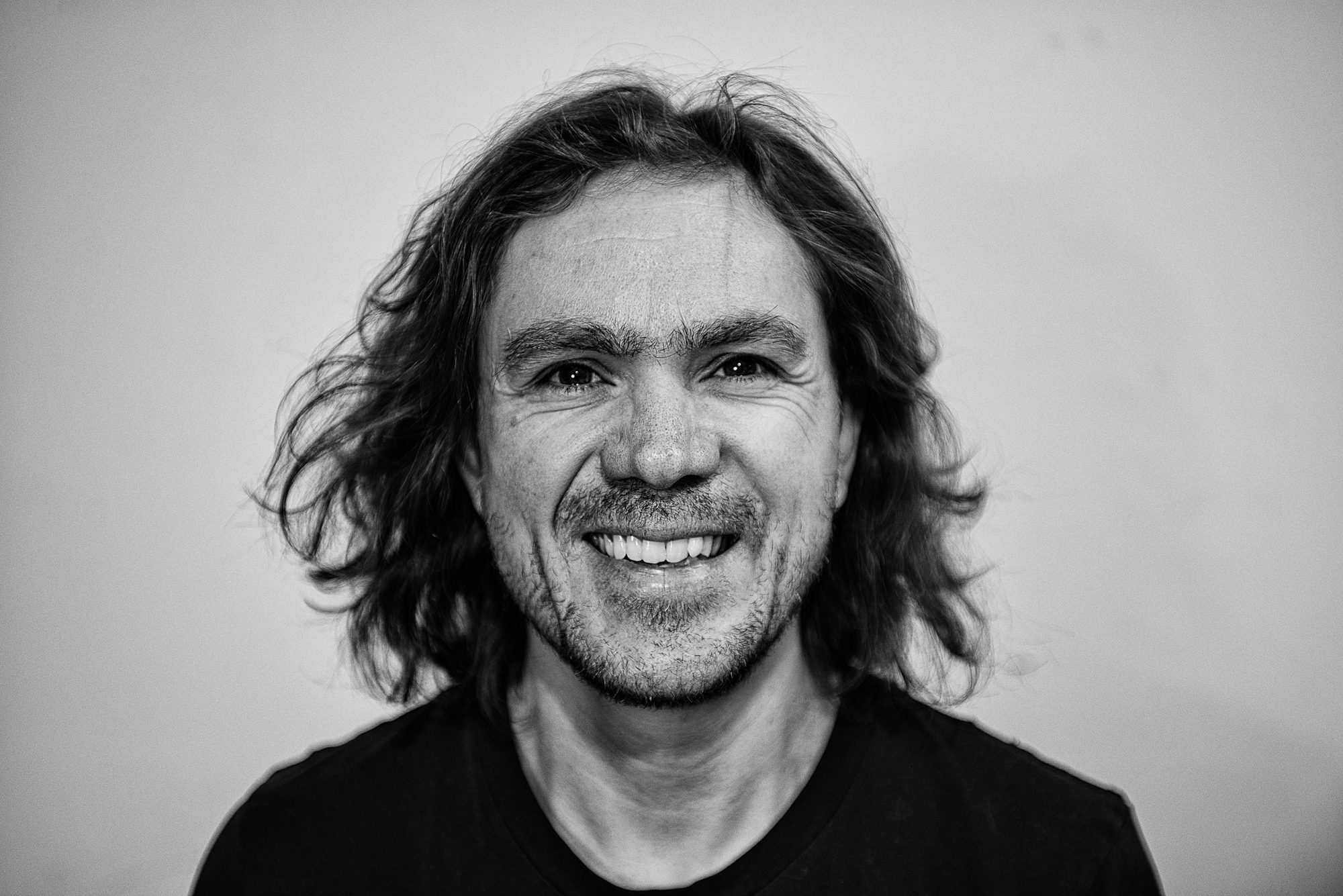
Hugo Solís García (Mexico, 1976) is an electronic artist and a tenured professor-researcher affiliated with the Department of Arts and Humanities at the Metropolitan Autonomous University. He specializes in the creative and aesthetic possibilities arising from the intersection of sound, digital technologies, and interactivity. He completed his undergraduate studies in piano at the National School of Music of UNAM, his Master of Arts and Sciences at the Massachusetts Institute of Technology, a DEA in Computer Science and Digital Communication at Pompeu Fabra University, and his Ph.D. in Digital Arts and Experimental Media at the University of Washington. His works and concerts have been exhibited nationally and internationally with support from various programs, including FONCA, UNAM, TELMEX, MIT, the University of Washington, DXARTS, IMEB-Bourges, the Multimedia Center, Transitio_MX, and Leonardo, among others. In 2013 and 2019, he was awarded grants from the National System of Art Creators of Mexico. He is currently a Level I member of the National System of Researchers. He previously served as Head of the Department of Arts and Humanities at the Metropolitan Autonomous University, Lerma Campus. His current activities focus on academic research and artistic production, specializing in the intersection of art, science, and technology. In 2019, he published the book El proceso en la producción de arte digital (The Process in Digital Art
Production).